

Alas, it is impossible to collect crumbled polystyrene, often referred to as Styrofoam™ which is a trademark. It makes me cry to see masses of it crumbled in riverbank soil, decades of constant accumulation from human litter. That means it is washing out to sea too. Now, I'm determined to campaign against polystyrene. Polystyrene does not biodegrade, is carcinogenic to humans and likely animals, plants and fungi. Huge chunks of it often get wind blown out of trash bins and into ditches. Big or small, it's got to STOP!
I have three new goals...
A: Federally Replace (as a Health Standard) NOT JUST Restaurant and Gas Station Takeout Polystyrene (Cups and Containers) with Cardboard or Waxed Paper BUT ALSO FEDERALLY BAN POLYSTRENE IN or OUT of the USA
B: Promote Biodegradable Options: Mushroom/Bio Based Materials, "NanoWood," NomaGreen for Industrial Packing and Food Safe Polylactic Acid (PLA) and Crystallized Polylactic Acid (CPLA)
C: Pass Federal Recycling Rebates for Consumers (Residential, Biz/Org and Govt/Mil) with NEW Waste Fees by Weight
Polystyrene:
Compared to making paper, manufacturing polystyrene requires about 42 percent less water and needs about 17 percent less energy.
- Polystyrene uses 22 percent less petroleum to source materials and ship
- Polystyrene doesn't call for chemicals that can harm water (but we know oil spills and leaks happen),
supposedly it doesn't involve chlorine dioxide
- Polystyrene doesn't necessitate the cutting of trees
Waxed Paper / Cardboard [WP/C]:
- WP/C produces about 28 percent fewer greenhouse gasses
- WP/C decomposes in a landfill in 20 years, as opposed to 1 million-plus
- WP/C decomposes in water in just a few days
- WP/C are far easier to recycle and recycled at a higher rate
- WP/C aren't toxic
- WP/C sourced trees can be re-grown sustainably
Source: https://driftaway.coffee/styrofoam-vs-paper-cups
Bottom line... polystyrene is a cheap shortcut that continues to pollute. WP/C can save the planet, affordably with a little water and a lot of sunshine.
NomaGreen Natural from Nomaco is a bio-based, closed-cell polyethylene foam made from sugar cane, a renewable resource, yet retains the performance characteristics of standard polyethylene foam. With an indefinite shelf-life, NomaGreen Natural will continue protecting your product for multiple uses, and can easily be recycled in the standard LDPE recycling stream.
Then I found out about NanoWood and mushroom-based materials mixed with farms' excess plant fibers called MycoComposite™ and AirMycelium™ by Ecovative!
Incentive to produce less waste by charging waste-rates for households and organizations is crucial to increasing recycling and transforming landfills' contents in the USA. In regard to recycling reform, some in Congress are taking it seriously here. But is it doing enough? Cleveland, Ohio recently admitted no recycling is going to landfills because it costs too much to recycle. At the mayor's discretion, Cleveland ended recycling at one point recently.
However, Cleveland restarted the program two years later!

Republic Services Recycling Center, (5/18/19). - SAM ALLARD / SCENE
Cleveland's recycling to waste ratio was at a mere 7% recycled. Across Ohio the average residential rate in 2018 was 29.7% according to the EPA. Cincinnati recycles and composts at a 22.5% rate (2019). Franklin County, (Columbus), recycles at 49.1%. With advocacy and education campaigning the city aims for 75% by 2032.
Great stuff going on in Tennessee to recycle and compost AT THE SAME TIME on a massive scale. Open this link for: Dollywood's Compost Facility.
Over seven years I have canvassed door-to-door in three states:
Indiana, Ohio and Kentucky (fundraising litigation on utility
company costs, practices and policy) to advocate sustainable energy growth and a healthy environment with three non-profit organizations...
Ohio Citizen Action (OCA)
Communities United for Action (CUFA) *Phone Canvass Only
Citizen Action Coalition (CAC)
Talking with residents about energy can be tough ground.
One person slams the door in your face... another can't get enough of you.
The irony is, we all fund one enormous project: power networking of our homes,
businesses and the utilitarian network that engulfs our living environment.
The massive trail of alternating current; or A.C., transfers and stores energy of power plants, "super" power lines,
grid stations, main lines, substations, "feeder-lines" and street poles that
filter current to your home, this business,
that factory, this thing or those things.

Source: Energy.gov
We MUST cool the planet. Airplanes are huge polluters and mostly unmentioned.
Methane from uncapped gas wells is worst at destroying ozone, livestock second.
Numbers show we use more and more electricity for cooling
our homes each year. Switching from gas to electric appliances would increase this.
And since we have more gadgets, we consume more energy overall.
We MUST make MORE ENERGY; clean energy. I wish I could write that regardless of
political perspective, science is reality. But, some are now hell bent on disregarding evidence. They promote convenience and pollution at the cost of destroying our survival as a planet and of course as humans. Utilizing science is the only way
to survive.
This BLOG is
my RESEARCH
to CHANGE
the TOTAL
ENERGY process.
I wrote to politicians:
"To reach our green energy demand,
would you mobilize troops of military engineers?
By mobilizing the Navy and increasing the US Army
corps of engineers to install one windmill per hour
at sea and in the great lakes, we could tap 360
gigawatts of offshore wind power from 100,000 mills.
Coupled with solar by installing suspended-cable parking
lot canopies we can reach 400 gigawatts just from solar.
An impressive 366 gigawatts from wave and 110 from biomass
and geothermal can reach our need of 1200 gigawatts in the USA by 2055."
But that demand figure is based on a gasoline system. If we have electric cars plugged in at night, the demand increases by a variable I cannot predict. Can all ground freight go full EV? If so, where do we get the mined metals for batteries? We can't mine forever! Bio-diesel isn't an option in cold climates.
My senior year at Ohio University,
I added an engineering course to my class schedule called:
"Entropy and Human Activity." It was a 400 level challenge and the professor asked me why I was in it.
He thought my dual major of print and web design did not make me an engineer back in the year 2004.
Oddly he too was a computer programmer. Hmm? Anyways...
Our final assignment was an engineering thesis paper, with the thesis; our own decision.
I chose to research all alternative fuels to petroleum to solve the pollution problem. I interviewed various faculty and none were optimistic for oil. One professor pin-pointed the 2050s as our projected exhaustion of oil reserves and hypothesized hydrogen fuel-cells as the only solution. California is already pumping hydro and some people drive hydro-cars. Other countries are researching, scaling up and GREENING hydrogen FAST!
But what's it cost?
Sadly, that goes just 125 miles, not 400 like gasoline.
There are 40 filling stations in California. Are they all less than 125mi apart?
Let's look at the sticker price of the cars:
$33,400 (2020 Honda Clarity, Hydro/Battery Hybrid) vs.
$58,550 (2020 Toyota Marai, 100% Hydro)
That's interesting; the hybrid is cheaper?
Get this though, it also drives WAY further at 360 miles/tank.
Still, the price of fuel above even with a battery involved is insane. Right? Who can run off that?
Well there's hope.
The site HondaNews.com
reports $15,000 of hydrogen fuel is included? What! Why? How??
Wait, it gets better. The California rebate of $4,500 means those sticker prices are negated.
Why can't we just advertise the savings' price with those knocked off up front?
People will buy at...
$13,900
If we could only get the cost of hydrogen down. Way down... We're on that! October 2021 saw $8 MILLION poured into research and development to reduce the cost of hydrogen production by 80% in the USA by decade's end. Some argue that $2/k is the magic number to market successfully.
With a hefty loan from the government, companies are breaking ground in storage and production of hydrogen: DOE unveils $500M loan for massive clean hydrogen project
I hypothesize that the manufacturing and distribution of both vehicles and H-fuel CAN work as a social dividend. One 100% free vehicle per citizen, free fuel forever, no limits.
And, if you really think about it, that's basically how we already consume oil. Like it is never-ending. But, guess what... It is. Here's the part by which I really am truly perplexed... In a garage, running a gasoline-powered engine, filling with exhaust will quickly suffocate humans. How come we can't admit we are suffocating the planet's atmosphere all day and night constantly, suffocating ourselves and ALL animals that breathe air.
The Apollo 13 mission control engineers and the spaceship astronauts acted quickly when they had to reverse their CO2 into oxygen. It is a good analogy for what we need to do on Earth to stop addiction to fossil fuel. And, I don't see battery-only vehicles solving the equation. That is a lot of mining we cannot do. It's a HUGE amount of charging we simply cannot afford. We need a replacement that can be more accessible than oil, as abundant as it and the real kicker, free to consumers in the USA. Why should it be free? People love free stuff. Put a price tag on it and we immediately get stingy. I suppose if it were at LEAST subsidized to be cheaper than gas and the vehicles cheaper ON THE STICKER, not after a rebate "offer," it might be possible to sway people away from another fossilized vehicle.
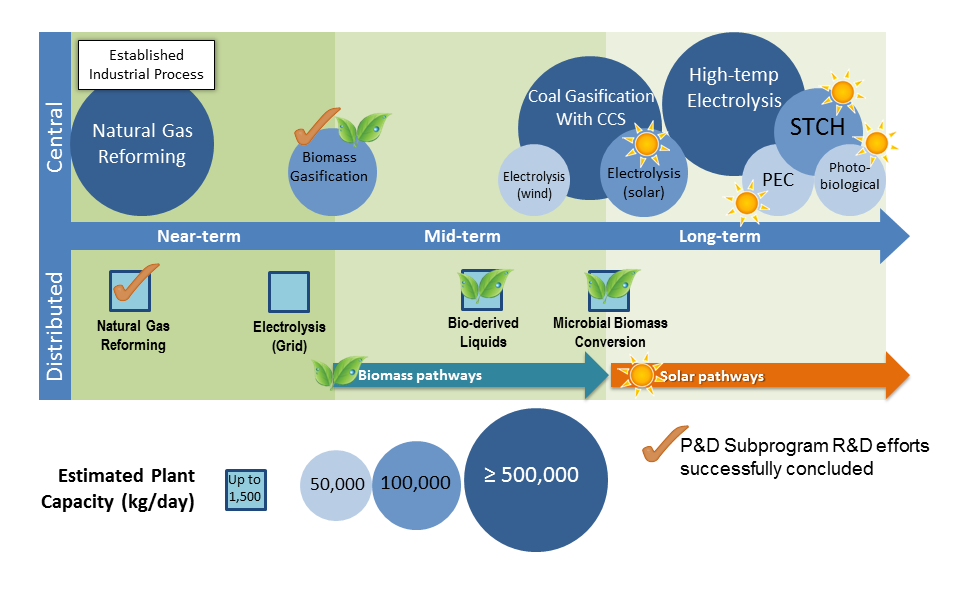
Unfortunately hydrogen is currently made using steamed coal more than clean, green ways. Yuck. We can't keep mining coal to serve the future. Another method now involves methane called "natural gas reforming" which would be cool if we could tap methane from livestock facilities' instead of horizontal-fracking (not cool nor "natural" at all). Horizontal fracking creates UNnatural geology that results in explosive eruptions, earthquakes where they shouldn't be, flammable pipes in homes and deadly and poisoned water sources.
That's not making me pro-hydro. It's noted the hydrogen fuel cell was first invented back in 1839 by Sir William Robert Grove. Wow! So where are we now with production?
Promising research AND development has paved the way for sustainable, ecologically sound methods of hydrogen fuel production now scaling up from labs:
The most interesting is the photobiological (genetically engineered algae / bacteria) process where all they need is water, CO2 and light. Here is a diagram for reference which then links to the scientific article:

Also leading the way in green H2 is the photoelectrochemical water splitting done by companies like Sun Hydrogen.
But, why does hydrogen fuel retail at $12-16/kg in California now? Is that price gouging/fixing/profiteering??? Certainly if coal and unnatural gas are the sources of production it is not "ethical" since these two methods ruin communities where mined and fracked. How soon can the American government change the price with PhotoBio, mass-produced, sustainable H2?
1. Hydrogen (H2) gas moves from the tank to the positive terminal via a pipe from the tank. The tank has to be reliable enough to avoid the hydrogen explosion.
2. Oxygen (O2) from the air moves to the negative terminal.
3. As a catalyst made of platinum, the negative terminal (anode [red]) speeds up the chemical reaction of hydrogen atoms splitting up into positively charged particles called protons and negatively charged electrons.
4. The electrons travel towards the positive terminal (cathode) through the electrolyte (yellow) since negative particles attract positive ones.
5. The chemical reaction of H2 and O2 happens in the cathode.
6. Electricity released from this reaction powers the electric motor (orange and black).
7. The protons travel to the cathode via an alternate route. Then they recombine with oxygen to get turned into water.
8. The water moves out via an exhaust pipe in the form of the water vapor or steam.
This is organized a bit differently in hydro-trucks currently on the road...
Trucks.com/2019/03/29/nikola-motor-fuel-cell-lab
Trucks.com/2019/08/08/nikola-motor-wins-federal-advanced-fuel-cell-development-grant/
The crucial factors are time and money.
If we stopped spending billions into trillions on military weapons and instead outlawed
gas-only vehicle production, we would get green fast.
If we subsidized the production completely of h-fuel, then
we get to point-B the fastest.
If we wait for capitalism to crawl us there, we will suffocate / bake the planet.
Do we really have the electricity bandwidth to go 100% electric though? And what's wrong with hydro/e-hybrids?
Green energy can power our homes but there is from my estimate only 76% of our power available from green energy (new biomass, new geothermal, new solar and new offshore wind).
But that 76% is excluding wave power. With wave power we can generate 110% of our 2018 power-need from green energy. We'll need more to meet the demand of 2025, with ever more people on Earth.
How possible is it?
Well, let's dive in...
Energy availability and consumption grid-wide, from light-bulbs to jumbo jets, is best diversified and free-traded.
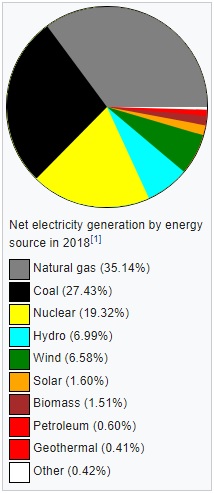
Nuclear as Chernobyl has illustrated, is scary and best avoided from monopolization. It only accounted for 19% of American power in 2018
(807 TWh / year).
Building up geothermal is a better plan but can only supplement other green sources.
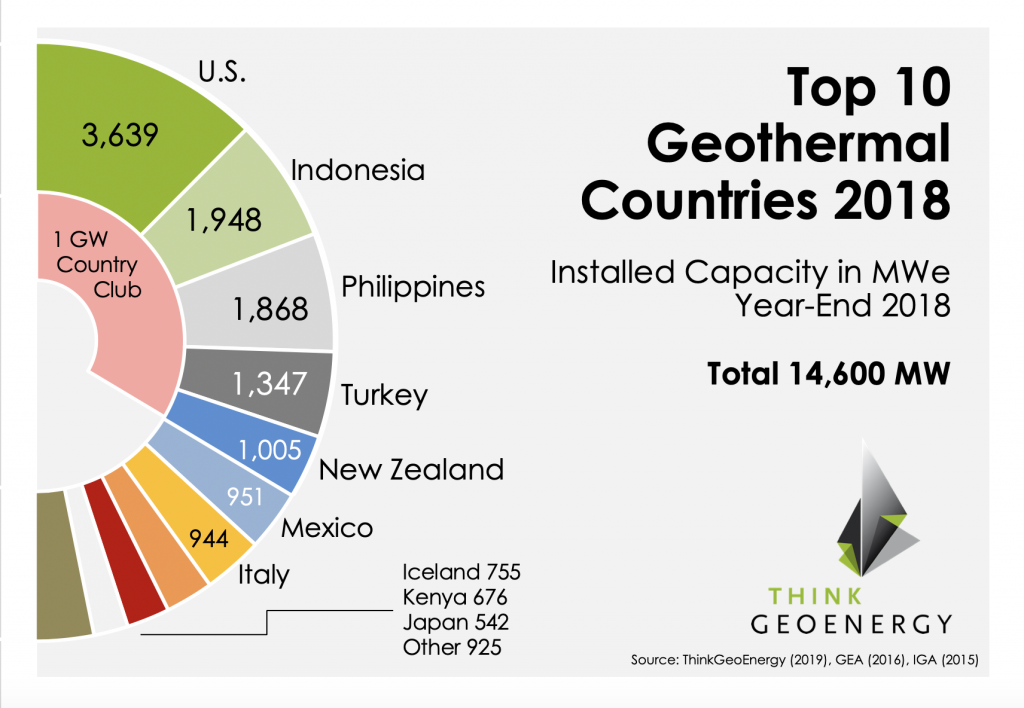
"EIA projects that geothermal electricity generation could more than quadruple between
2012 and 2040 (increasing to over 6.7 TWh)"
Source: EIA.gov
The 2012 total energy capacity of the U.S. was approximately 1,100 GW.
1,100 GW / year runs the USA (4,035 TWh). 688.27 GW is coal and "natural" gas combined. Wave power can meet just over half that. Geothermal can operate at an average 44 MW at a 2012, American, (standard) plant. At that rate, building 12,535 plants at 44.5 MW per plant yields 55.78 GW.
According to this 2009 article,
55.78 GW total geothermal is possible.
Here is where they can be built by density...
Not much from geothermal then. What if wind and solar potential was underestimated in 2012? What if we install windmills across the middle of the great lakes
near the Canada border?
What if we add to Atlantic and Pacific shorelines? Coal plants are black and white in this next map (below). Current windmills are shown in grey.
Even in Lake Michigan they aren't out in the middle yet.
In fact, they aren't in any of the great lakes...
Is that actually true that windmills would ruin the coast guard radar?
I wrote an email to the District 9 (Great Lakes) Coast Guard...
"Hello,
I request an answer to a big question. Do new windmills over bodies of
water make radar impossible for the Coast Guard?
Thank you for your time today and for your service to America."
"Good Morning Brian,
No they do not affect our radar."
Respectfully,
Petty Officer __________
A GOP Senator from New York promotes another irrational fear of "potentially toxic sediments" poisoning the public drinking water during windmill installation. However; the most toxic metal, mercury, is liquid at lake temperatures above -37.89°F.

Bats fly by and can avoid blades. But the high air pressure near the blades shockwaves the bats' lungs. The lungs fill with fluid and they actually drown.
So, what about offshore windmills outside bats' feeding and migration routes?
Wind turbines kill anywhere from 214,000 to 368,000 birds annually. Yet, an estimated 6.8 million fatalities occur due to collisions with cell towers and radio antennae. Furthermore, 1.4 billion to 3.7 billion bird deaths from cats occur each year, according to a peer-reviewed study by two federal scientists and the environmental consulting firm, West Inc. Less than 0.1% of the populations of songbird and small passerine species in North America die from collisions with wind blades.
So yes .1% of birds will die from windmills on shore as will bats. But OFFshore is a safer place to install. Some will, some won't make it over wind farms 260m (12MW) or even 300m tall (16MW)...
Flight altitudes vary among types of bird. But, most birds in all groups flew under 300 meters. Swans, geese, ducks and cranes fly higher than raptors, shorebirds
and passerines. Flight altitudes vary
among species regardless. Plus, with seasonal migrations, flights are higher in fall than spring and can spike or drop like 1989 saw.
BirdNature.com has maps of the migration routes.
To avoid an increase of the .1% collision rate, offshore mills need to be pretty far from shore on the Atlantic but the Pacific mills can be closer to shore. Oregon's coast should probably not be dotted with mills. The southern shores of Alaska can be as close as a standard set-back of 3 miles. The Great Lakes are not a major flyway. So, no problem there.
Do windmills make too much noise for fish? More than boats??
I can't imagine they do or GE wouldn't be making so darn many of them to sell.
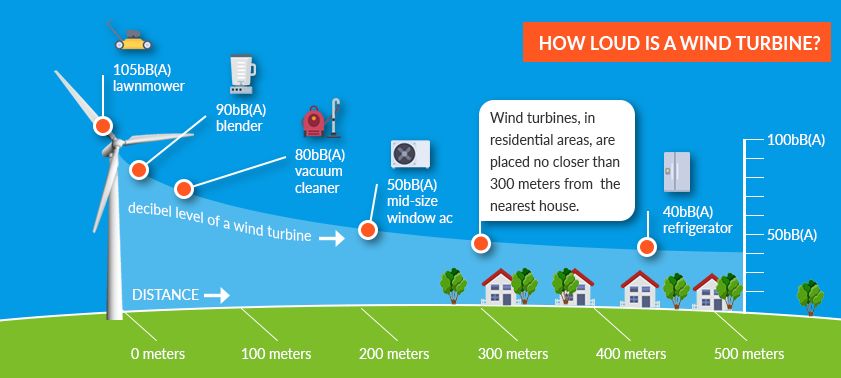
The amount of noise windmills produce is much less than a cargo ship or trucks going 55 miles per hour. They are much quieter than lawnmowers.
"At a residential distance of 300 meters (980 feet) this may be around 45 dB, which is slightly louder than a refrigerator."
Source: Wikipedia.org
Can we really afford to avoid installing offshore windmills?
If the answer is no, how many do we need anyways??
I decided to find out, and ironically 100,000 is reachable. How quickly that number can be installed, depends on the speed of manufacturing more so than installing.
In 2018 the USA consumed 1,100 GW of power. How does the biomass / geothermal / solar / wind / wave equation add up?
Over deserts and over water, wind power increases. Altitude also increases it.
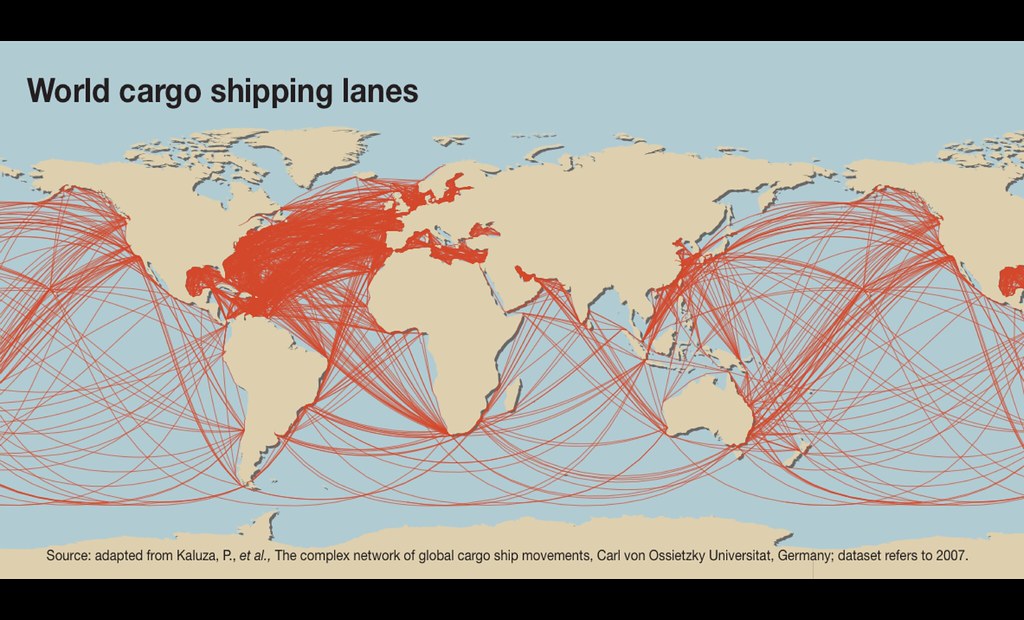
But, don't worry cargo ships fit between each mill.
The biggest container ships are about 1,300 feet long and 180 feet (55 meters) wide maximum.
Source: WorldShipping.org
The diameter of the blades times seven is the distance between mills (1,050m - 1,540m). The largest wind farm in the world, Gansu Wind Farm in China's Gobi Desert had a capacity of over 6,000 MW in 2012, with a goal of 20,000 MW by 2020. As of September 2018, the 1026 MW Walney Wind Farm in the UK is the largest OFFSHORE wind farm in the world. It has 189 mills at 5.5 MW each in waters 19m to 23m deep and cover an area of approximately 73 km2 (45.3 mi). There are new windmills of 12 MW capacity, 16MW and 20MW expected soon. Winds gust enough to operate offshore mills on average 32.5% (15-50%) of the time. My 100,000-mill sum of 310 GW accounted for the loss (from 956 GW capacity). But those were mostly in American waters.
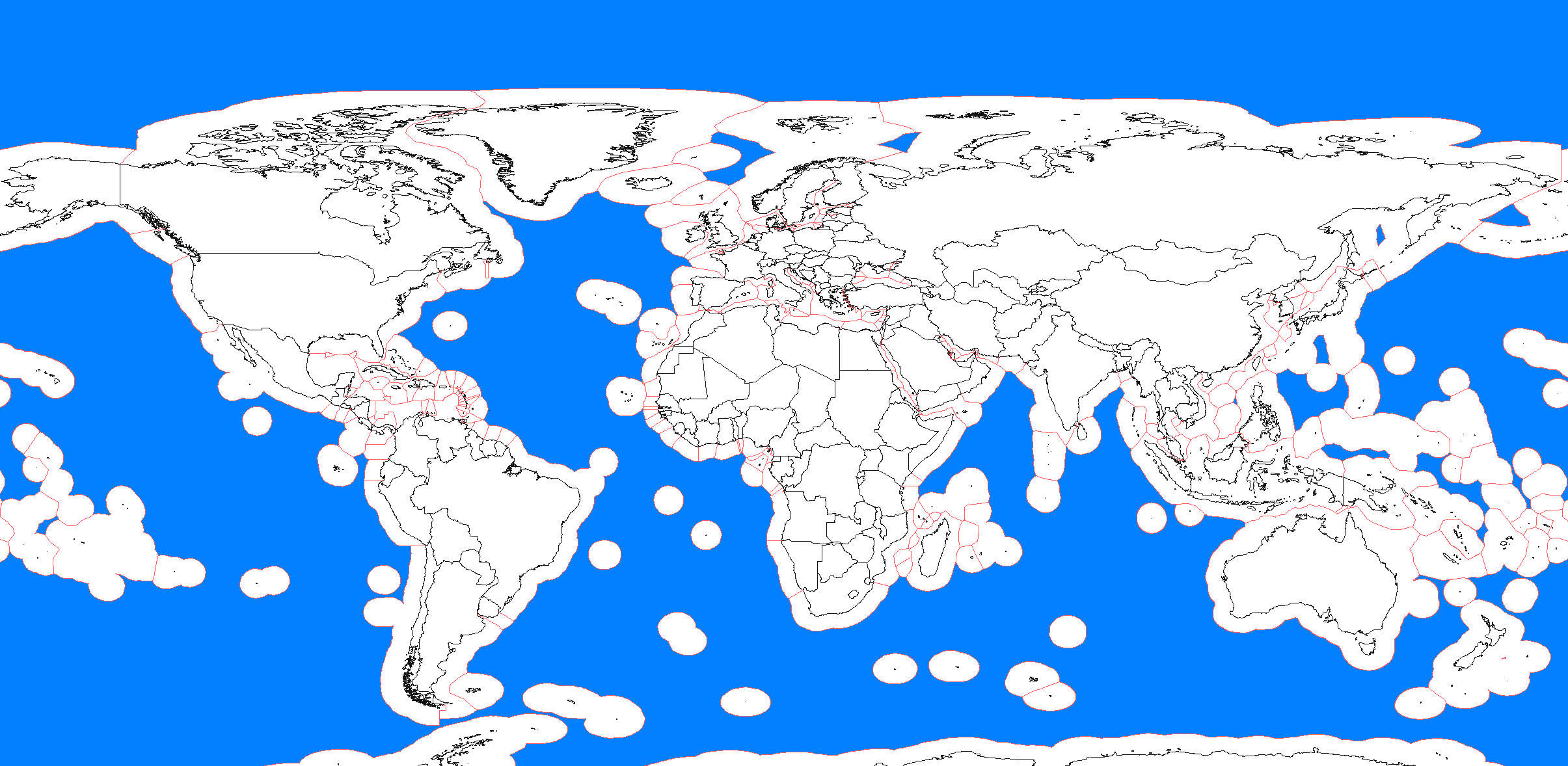
Can American windmills be installed within international waters? 200 miles encompasses the exclusive economic zones (EEZ).
The Pacific has much more wind potential than the Atlantic by size. Plus, it also has fewer shipping lanes. For the sake of imagination, let's say America can put windmills in the northeastern Pacific and Gulf of Alaska.
I am not sure why we find such drastic graphs but apparently shipping is not restricted to primary and secondary lanes.

On Google maps the Pacific is split in half by a dividing line.
Since there is no rule against building windmills out at sea (as long as they don't interfere with other countries)
let's design a windfarm in the Gulf of Alaska and the eastern Pacific. Perhaps a "wind farm" half of the 4,597,000
meters from Juneau to Hawaii by a quarter of that width...
2,298,500 x
1,149,250
Using 12 MW mills spaced apart 1,540 meters yields
746 mills wide. How many lines of 746 can we make across the 2,298,500 length?
Subtract 15,840 meters for a 3-mile set-back from Alaska
= 2,282,660m / 1,540 = 1,482 rows. 1,482 times 746
= 1,105,756 mills = 13,269,072 MW
= 13,269 GW / 32.5% wind time (operating)
= 4,312 GW
That's close to four times the power America needs annually.
But what does this cost and how long will it take?
Let's say to make math easy we put 1,000,000 windmills out there. If we put in one windmill per month it takes 83,333 years.
Let's start over.
Let's say we can put in one windmill per week. And we're only concerned with 250,000 mills being done to meet our energy needs.
Subtract two weeks for holidays in July and December.
250,000 / 50 is 5,000 years.
Or we could install 5,000 mills per week. LOL
Let's say two per week.
Since the minimum installation time reported in 2018 is one per day, privately funded, we need to work faster.
Working the Army Corps of Engineers round the clock in shifts... 100,000 mills is only possible in 274 years.
It would take 69 years to put in four per day at 1,460 per year.
Dare I say it takes 34.5 years installing eight per day?
That's not as bad, equaling 1,200 GW or 390 GW at 32.5% operating time.
Off coal and natural gas by 2055 sounds good.
But we really need to know how fast GE can make these in France. And what about Europe? Where can they put Atlantic mills? Unfortunately major shipping creates the biggest mess across the Atlantic. Cargo ships ARE small enough to fit between the distance between big mills. But, it's one thing to pass through two mills ONCE but navigating across an array is just not something we can ask of ships. The Mediterranean is not ideal either. Too small and busy. But the Norwegian Sea is a great place to build an array.
Let's calculate the offshore location:
Jan Mayen to Skomvær
70.910508,-8.471470
67.406857,11.863068
=891.52 km
Jan Mayen to Fontur
70.910508,-8.471470
62.193801,5.099121
=1137.95 km
Fontur to Ervik
62.193801,5.099121
66.378560,-14.531552
=1052.99 km
Skomvær to Ervik
67.406857,11.863068
66.378560,-14.531552
=1153.19 km
We subtracted three miles (4828 m) from each end for a setback. Blade diameter times 7 = 1,540 m to space mills apart.
880,000 / 1,540 m =Studies show in a cluster of windmills generating 1000 MW, about 25% of the output is lost, if the rotors are spaced 10 diameters apart. And larger arrays show variation which can draw conflicting views on optimal rotor height.
That could mean the 1625 is more like 1,218.75 GW in the Norwegian Sea. The Pacific grid I calculated would be more like 3,234 GW. Still that's triple what the USA needs. But these arrays BOTH need some sort of UN agreement due to being outside an EEZ. It's such a grey area if it would negatively affect OTHER countries.
Then there's some maintenance issues out at sea. Saltwater corrosion damages turbine feet and that in 12 to 15 years some turbines' efficiency decreases sharply. Larger wind farms per windmill actually perform less well due to close proximity and sheer turbulence. Advocates of wind power the return of investment is still there. So, starting in the Great Lakes sounds like a better plan.
Still, windmills age. Does the 13-year curse mean it's all for naught? What is wrong with creating windmill-maintenance jobs and a thriving industry recycling them?? Norway recently (October 2019) halted onshore-wind development after protests and local municipality opposition. I too am only pro-offshore wind, in order to keep bats 100% safe and birds safer, avoiding major migration routes. Avoiding saltwater on the freshwater great lakes means no salt corrosion.
What if the feet were coated in silicon? That won't corrode. It is the second most abundant element on Earth next to oxygen. Yamaha already sells a spray coat. Hmm...
How many windmills can go on Lake Michigan? It's the third-largest great lake by surface area (22,404 sq mi [58,030 km2]).
Rather, how many 7 MW mills will fit? Bigger blades means you need to space them apart more = fewer mills.
The 12 MW mills are; however, more efficient and I'll get back to them shortly for Atlantic, Pacific & Gulf installs.
Lake Michigan has an average depth of 46 fathoms (279 ft; 85 m), while its greatest depth is 153 fathoms (923 ft; 281 m).
Scotland's Beatrice offshore mills are the planet's deepest at 288 meter-long "jackets" (legs) fixed under mills.
Lake Michigan is 307 miles (494 km) long by 118 miles (190 km) wide with a shoreline 1,640 miles (2,640 km).
Wind turbines should be distanced by 3-10 times the rotor diameters. Seems 7 is the magic number. For 7 the constant of separation at 164m diameter spacing to 1,148m apart for 307 miles or 4,940,000m.
Account for set-backs of 3 miles from shorelines (4,828m x 2 = 9,656m) reducing it to 4,930,344m.
For $51.5 billion, Lake Michigan yields 4,294 mills in just one row from north to south.
Triple that with another row on each side (off-set to avoid proximity interference)
= 12,882 mills.
7 MW each = 90,174 MW. That's 90 GW and operating in wind at 32.5% of the time is still twice the output of the Gansu farm (costing $17.5 billion to build).
And 20,000 more could line the shore (3-mi set-back) costing $240 billion.
$394,584,000,000 covers both the length (three rows) and the shores once for 230 GW on 32,882 mills (74.75 GW at 1/3 op-time). That's 75% of the global projected wind installs (100 GW for 2020-2030), according to GE. But Michigan isn't the greatest lake.
Why is it SUPERIOR? It's 406m at its deepest.
Not only the deepest but largest great lake. And, it is the world's largest, freshwater lake in surface area.
To dot just 40% of the shores' 1,729 mi (2,783 km) would equal 11,132,000m around it.
Let's say we have $150 billion.
That equals exactly 12,500 6MW mills
(GE Haliade 150m-wide).

States do not pay for this. The army corps of engineers can build it so that reduces the bill to out-source.
Despite the 12 MW mills existing (use those for oceans and gulf)... 150m diameter times 7 = 1,050m apart. On 40% shoreline that's 10,600 mills.
Merely $127.2 billion parts, leaving $22.8 billion for transportation (diesel). That's 63,600 MW or 63.6 GW power.
But that's just 40% of the shore. How about building along the Canada border 307 km (191 mi)? Subtract 6 miles for set-back to 185mi = 297729m.
Another 283 mills run the border once = 1,701 MW.
Output reaches 65.29 GW for 10,883 mills.
At 32.5% op-time
= 21.21 Gigawatts LOL!
Length = 193mi (310,603m) minus 6mi = 310,597m for set-backs
= 295 windmills.
Shoreline = 330mi (531,084m) figuring 40% = 212,443m
= 200 windmills.
Triple it to fill the shore = 600 mills
Total = 895 windmills at 6 MW each = 5,370 MW or 5.37 GW.
Length = 241 mi (387,852) figuring 1% loss for set-backs of 3mi = 383,973m
= 365 windmills.
Shoreline = 470mi (756,392m) figuring 40% =302,556
= 288 windmills.
Triple it to fill the shore = 864 mills
Total = 1,229 windmills at 6 MW each = 7,374 MW or 7.37 GW.
This one is quite tricky.
The length is not the same angle as the jagged US-Canada border.
Surface area = 59,600 square km. Hypothesis... let's take a third of it
as useful on the American side = 19,668,000m
Now we have to use the square root x 4 to draw our wind-lines
= 4,434 x 4 = 17,736m
Spacing apart 1,540m = 11 mills
Triple it for 33 mills at 12MW = 396MW or .39GW.
Not much in the middle of Huron.
But the American third of the shore = 983,400m
= 638 mills x 3 = 1,914 mills + 33 = 1,947 x 12MW
= 23,364 MW = 23.36 GW
230.00 GW Lake Michigan
65.29 GW Lake Superior
23.36 GW Lake Huron
07.37 GW Lake Erie
05.37 GW Lake Ontario
------------
331.39 GW CAPACITY
------------
107.7 GW = 1/3 TIME
That's 9.8% of the 1,100 GW America needs to run annually.
Offshore windmills operate on average 32.5% of the time
out at sea. The great lakes being land locked could be less.
Let's find more power.
I assume that 12 MW mills cost over $12,000,000 but I cannot find a price yet from GE.
You would expect that twice the power of 6 MW mills would mean twice the diameter.
But it's 150m for 6 MW and just 220m not 300m for 12 MW. 16 MW and 20 MW mills are expected to roll-out shortly.
The closer to shore the better for power transfer.
The power losses (Pw) in the wire are a product of the square of the current (I) and the resistance (R) of the wire, described by the formula:
Pw=I2R
That excludes Alaska coasts.
Using 12 MW mills at 1,540 apart
= 12,910 windmills.
Triple it to get proper bandwidth
= 38,730 windmills along the coasts
= 464,760 MW or
= 464.76 GW
= 42.25% of American Power / YEAR
= 150 GW at 1/3 Time
= 13.63% of American Power / YEAR
But there are three areas left to cover.
Let's add more to the Gulf of Mexico across the middle... 1,500 km (932.06 mi - 6)
= 926 mi = 1490.25 km = 1,490,250 / 1,540 = 967.69
= 2,901 mills x 12 MW
= 34,812 MW
= 34 GW
= 11.05 GW at 1/3 Time
Now for Alaska's shoreline. Since the western shores are used by migrating birds (as shown at link below), an area
left for windmills is the north-east of Alaska and the entire southern shores. We can probably find more there but 2,826 mills totals 33,912 MW
= 33.91 GW
BirdNature.com has maps of the migration routes.
No longer will Alaskans use a lot of petroleum (way more than mainland Americans). Hawaii's residents do the same. What if we put windmills in the Pacific from
Hawaii to California tripled?
2,468 - 6 = 2,462 mi = 3,957,000 meters / 1,540
= 2,569 x 3
= 7,707 mills x 12 MW
= 92,484 MW
= 92 GW
= 38,730 Mainland Coasts 464.76 GW (12MW each)
+ 32,882 Michigan 230.00 GW (7MW)
+ 10,883 Superior 65.29 GW (6MW)
+ 7,707 LA-Hawaii Triples 92.00 GW (12MW)
+ 2,901 Gulf of Mexico Width 34.00 GW (12MW)
+ 2,826 Alaska 33.91 GW (12MW)
+ 1,947 Huron 23.36 GW (12MW)
+ 1,229 Erie 7.37 GW (6MW)
+ 895 Ontario 5.37 GW (6MW)
=================
100,000 WINDMILLS
= 9.56 MW AVG PER MILL
[ 47,836 ON GREAT LAKES ]
[ 54,111 MILLS OF 12MW ]
WINDMILLS OPERATING
32.5% TIME = 310 GW
There are more than 2 million acres of uncovered parking area, which equals 200-400 GW of undeveloped solar parking capacity. From 2020-2045 it's possible to add 200 panels for each that currently exist. Germany increased solar capacity 100-fold from 0.44 GW to 39.7 GW between 2003 and 2015.
We can do it too. Here's how...
Conger Solar has a bigger, brighter, BOLDER and crucial SOLUTION. Especially when using new heat-converting panels which, since emerging in 2016, have not been commercially driven by the solar market and I aim to find out why.
PLEASE read on about advocacy of ...
LUCRATIVE, COMMERCIAL
PARKING-LOT
SOLAR-CANOPIES
According to the Lawrence Berkeley National Laboratory, pavement makes up 35 to 50 percent of total surface area in cities, and 40 percent of that pavement is parking lots.
Suspended, tensile-cable panel-canopies
CAN harvest electrical revenue HERE
consistently and indefinitely
over the hot, black asphalt ;
whilst solving a PROBLEM plaguing the
over-developed world...
too many HOT-PARKING LOTS
are wide open to the sky!
Imagine, your grocery shopping ends in the middle of summer with a cool trunk!
PARKING-LOT-HEAT
is an unspoken catalyst
of climate change
and actually
HEATS marine life.
In August 2001, Cedar Rapids, Iowa experienced a fish kill due to the water temperature increasing 10.5C (18.9F) in just one hour. Heat affects insects' behavior too since they are exothermic, altering symbiotic relationships
amongst various microorganisms, plants and animals
(including humans).
It also increases the energy demand of
air-conditioning
units. Although current technology of OLD / MOST solar panels does reflect heat instead of absorbing the sunlight and converting it, technologically advanced panels capture the heat and convert it too.
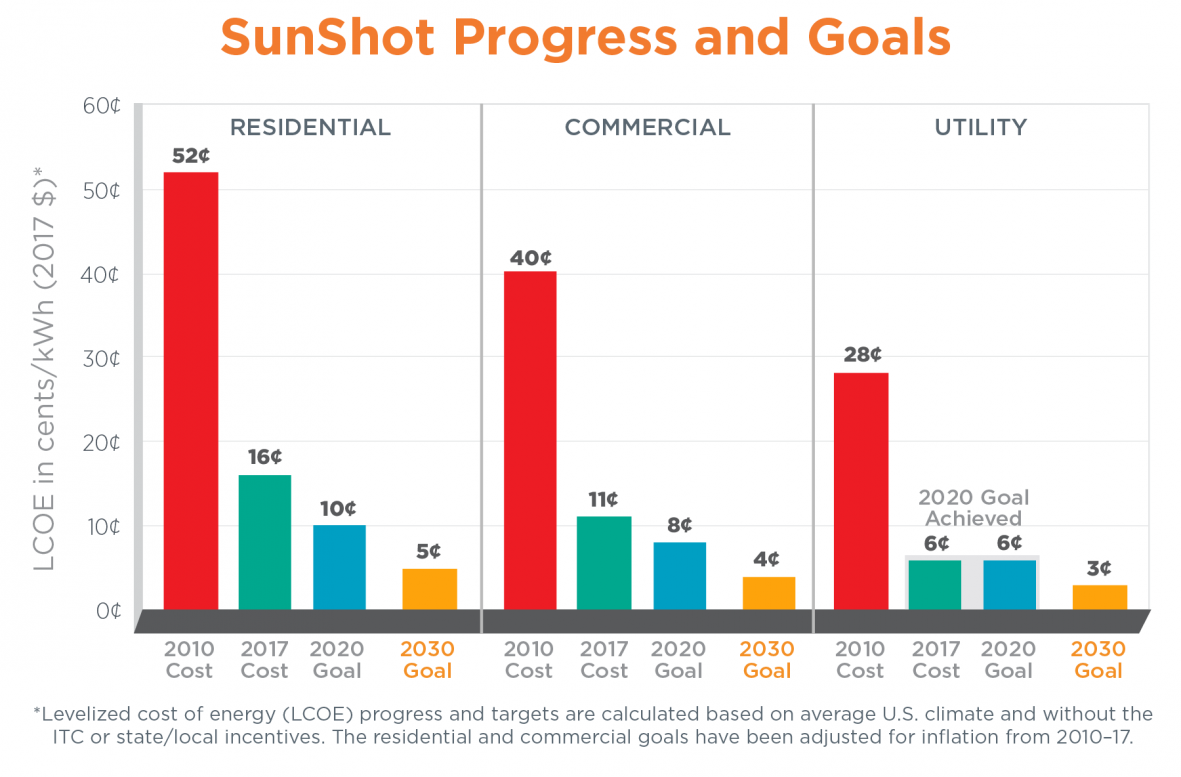
The federal SunShot Award,
granted P4PEnergy (now called Conger Solar Systems) with $1,000,000 to scale up and diversify
solar structures and make them far
LESS expensive.
It worked & they ARE!
Please read about
SunShot Awards
and the
COMMUNITY
CHALLENGE
at...
Energy.gov/EERE/SOLAR/sunshot-prize-solar-your-community-challenge
What state can fund-raise and
PUT UP THE MOST
parking lot canopy panels first?
Don't let LOCAL offices CLAIM that zoning should be denied.
Zoning for something so new as
tensile-cable canopy-panels
CAN approve.
A solid starting platform is schools' stadium lots.
Especially large COLLEGE LOTS!
What about HAIL?
Actually a canopy shelters students', teachers' and fans' cars from HAIL damage.
Solar panel manufacturers test their products to ensure
that they are capable of withstanding
impacts even from
LARGE hailstones.
MYTH: solar panels don't work when it's cloudy.
FACT: solar panels do produce electricity in
cloudy weather. They don't produce as much
electricity; true. But, they have been shown to
produce 25% of what they produce on a sunny
day, or 10% when it's very cloudy.
Germany has fewer hours of sunlight.
But, it is currently the global leader in solar
system implementations.
In addition to the 30 percent tax credit available for businesses that construct solar canopies (and other types of solar panel systems), Americans can write off the value of their solar energy systems through the Modified Accelerated Cost Recovery System (MACRS), which reduces businesses' tax burden and accelerates returns on solar investments. Qualified solar energy equipment is eligible for a cost recovery period of five years. Accelerated depreciation can reduce your net system cost by an additional 30 percent.
What I wonder is what unrealized energy is actually available to power us BUT
intentionally avoided by its defenders (investors of fossil fuel).
Duke has harnessed some "green" energy to please the outcry...
https://illumination.duke-energy.com/articles/upgrades-underway-at-duke-energy-s-most-intriguing-plant
https://illumination.duke-energy.com/articles/how-is-power-restored
https://www.duke-energy.com/our-company/grid-improvements
https://illumination.duke-energy.com/articles/building-a-smarter-energy-grid
So, that's 36 hours of 200 MW from 1700 simple wet-cell batteries and an array of _______ panels?
Where are the rest of these? One fire station in one town is a start. But,
we need bigger changes. How??
I strive to reduce the lack of structural change,
to reduce the wall of red tape. I have introduced my ideas to politicians. Talk to them in your community and country.
If they don't listen, SAY IT AGAIN. Then, join hands and fund-raise. Use a public park! Co-op to buy abandoned modest lots to build solar canopies that return their investment within 8 - 10 years. Kentucky even has solar co-ops running and huge deals slated. By 2022, KYMEA aims to increase solar 18 percent, cutting coal to 35 percent.
It takes 8 years to fully return the residential cost of installing solar at $20,000. Solar roofs of that size are going to save you
$2,500 per year on an average electrical bill.
Most people don't have $20,000 on hand. But installing the setup of a system and one or more panels per year isn't impossible...
Amazon has a basic kit for 3 prices:
100 watts = $129
200 watts = $218
400 watts = $404
So, for $1 per watt you can reach 1,000 watts (1kw) in ten years easily.
Yes, 1100 watts is only enough to power a large microwave. But, panels last about 40 years.
Have a look at ThoseSolarGuys.com about panel lifespan.
The protruding structures that tower over our farm fields and landscapes hold not just the power lines themselves, but are the shoulders of a solar future. My idea for solar panels to exist on / under / between EXISTING power line structures and OVERHEAD EXISTING STATIONS is simple (obvious even)... I envision a SOLAR NETWORK of suspended, smart panels tracking the sun that plug right into the existing grid. While residential roof-top solar crawls like a snail due to home-owner sentiment... I deem it wise and lucrative for utility companies like Duke to deploy smarter grid solutions like solar and water-tower turbines. First, just for back-up power. Next to recreate the main sources (petrol, invasive gas fracking, coal & nuclear).
The American Council for an Energy-Efficient Economy (ACEEE) reports that in 2008 coal cost between 7 to 14 cents per kilowatt-hour (kWh); natural gas cost between 7 to 10 cents per kWh; and wind between 4 and 9 cents per kWh. While NEW nuclear, is estimated to cost 15 cents per kWh, or more. Energy efficiency is the cheapest resource, at 2.5 cents per kWh.
Right now on the Canary Islands of Spain, sustainable hydro is coupled with windmill power. By retaining a large amount of water in an elevated reservoir...
a simple, powerful means of low input, high output occurs.
Shoreline windmills allow for water to go up as the plant pumps water uphill to a reservoir that can later release its energy via gravity spinning a large
turbine into electricity.
1. Freezes / Gels in Cold Climate
2. Rubber Corrosion
3. Low Fuel Efficiency
4. Low Supply for Demand
5. Could Increase Food Cost
1. Non-Toxic & Biodegradable
2. Decreased Oil Dependancy
3. Safer Storage & Emissions
3. No Need to Re-Engineer Vehicles
5. Lubricates & Extends Life
A July 2010 Associated Press investigation revealed that there are over 27,000 abandoned oil and gas rigs in the Gulf of Mexico,
and that no one is monitoring them. One of these wells was abandoned in 1940, before many of the current regulations were put in place.
The report goes on to show that even the current regulations are often ignored.
The northern half of the Gulf is American waters,
as shown below...
It depends on if American mills can go in international water or not. If so, wind energy is easily viable enough because of the Pacific.
But international waters law does not say yes or no to wind from my research.
Without the three lines of windmills from L.A. to Hawaii generating 92 of the 1,186 GW, it reduces to 1,094 GW green energy. Just shy of the 1,100 GW needed in 2018.
One alternative would be installing within that 200-mile threshold offshore of Hawaii. Another location is the Alaska archipelago economic zone.
The Hawaiian Islands stretch 1,523 miles from the island of Hawaii to Kure Atoll in the North Pacific Ocean. That is broken in the map with the main islands on the left edge
and Kure Atoll (still in our economic zone). Since the tourism industry probably would not want windmills visible, they could be set-out 50 miles (over the range of visibility).
2451030 x 2 (each side north and south shores) = 4,902,060 meters divided by 1,540 meters blade-buffer yields 3,183 windmills of 12 MW
= 38 GW x .325 = 12.35 GW Power.
Could windmills go in Okeechobee which has been drying up for years? Its ecosystem, wildlife and businesses are threatened by the 11.23 foot elevation. Okeechobee was 12.5 feet to 15.5 feet in previous years.
Does it matter that lakes are drying up? In 2013 it was reported that Lake Huron and Michigan had hit their lowest water levels ever recorded, according to the U.S. Army Corps of Engineers

All I can muster with my lack of engineering education or practice is aquatic drones that float and eat the plastic instead of organisms. Not too many of them but enough to start eating away at the problem. I envision they simply gulp and sift with some kind of smart recognition, if it's alive and small enough that it passes through the grill into the mouth, then the buoyant microplastic should be collectible on the surface or near it inside the drone cavity. If too big it bounces off the grill-plate and swims away. Then, like 3D printers, plastic particles melt in yet another contained, insulated chamber that spools it. They simply spool to a certain length (size and/or weight) and drop off to sink to the ocean floor where sonar can detect their unique cylinder shapes and collect them over the years. SOLAR POWERED TOO... GPS LOCATORS... Of course the right idea is bio-plastic that's compostable for land but I don't see it solving the sea pollution. I do think we have to stop making plastic and stop fossil fuel by switching to production of only new hydrogen fuel cell cars, trucks, jets and ships. So, if you like my idea, make it. I claim no intellectual property for P3 in any way. I just wanna save the planet for everyone.
If you want a real answer, just click this Google search to read the top search result about 1080i vs. 720p.
Email me your debate points for each case.
This InformIT blog explains.
Allow me to clarify the definition of a podcast: an electronic broadcast seen or heard on a PORTABLE device.
YouTube videos are not podcasts because they cannot be stored on a portable device. Although you can view them on a smart-phone inside the YouTube app, an internet connection is required. If YouTubes can be saved for offline use, that classifies them as a podcast.
Webinar: any live sharing of monitors, web-cams, or audio.
While a podcast is usually prerecorded, webinars might contain live broadcasting or share a live transmission through a virtual network. VPN or remote-desktop is essentially a 1-on-1 Webinar. Skype, GoToMeeting, AdobeCONNECT - they all allow for simultaneous transmission of more than one stream.
So... Does "webinar" mean just live media or live interactivity?